LeadX Ventures Blog
How to Find Investors for Your Startup: A Founder’s Guide
Finding investors is one of the biggest challenges startup founders face when preparing to raise capital. You might have a promising product, a strong team, and a clear vision, but reaching the right investors requires more than sending your pitch deck to a long list of venture capital firms.
The key is to identify investors who align with your startup's industry, funding stage, geography, and capital requirements.
In this guide, we'll explain how to find investors for your startup, where to research them, and how to build a focused investor pipeline.
1. Define Your Fundraising Goals
Before searching for investors, clarify what your startup needs. Start by answering these questions:
- What stage is your startup at: pre-seed, seed, or Series A?
- How much capital are you planning to raise?
- Which industries or markets does your business serve?
- Which countries or regions are you targeting?
- What investment size would be appropriate for your round?
- Do you need a lead investor or several smaller investors?
These details help narrow your search. A pre-seed AI startup seeking early-stage capital will have a different investor profile from a Series A company expanding internationally.
2. Understand the Different Types of Startup Investors
Not every investor is suitable for every business.
Angel investors
Angel investors typically invest their own money in early-stage companies. Some bring industry expertise, operational experience, and valuable professional connections in addition to capital.
Venture capital firms
VC firms invest through managed funds and often focus on specific industries, stages, geographies, or business models. Their investment criteria and check sizes vary considerably.
Accelerators and startup programs
Some accelerators provide funding alongside mentorship, founder networks, and access to potential investors. Review their eligibility criteria, program terms, and application requirements before applying.
Corporate and strategic investors
Companies may invest in startups that complement their products, technology, or strategic goals. These investors can be relevant when your startup has a clear connection to their business.
Choose investor categories based on your company's stage and fundraising objectives rather than targeting every available source of capital.
3. Research Investors Through Multiple Sources
A strong investor search combines database discovery with direct research. Useful sources include:
- Investor databases: Discover funds, investment stages, portfolio companies, and geographic preferences.
- VC firm websites: Review investment theses, team profiles, submission guidelines, and publicly stated criteria.
- Portfolio company announcements: Identify investors that have backed startups similar to yours.
- LinkedIn: Research investors, partners, principals, and potential professional connections.
- Startup funding news: Identify firms and angels associated with relevant funding rounds.
- Accelerator networks: Discover investors active in particular startup communities or sectors.
Treat databases as starting points rather than unquestionable sources of truth. Verify important details using current, credible sources whenever possible.
4. Build a Targeted Investor List
Once you have identified potential investors, organize them into a structured database. Useful fields include:
- Investor or VC firm name
- Website and LinkedIn profile
- Investment stage
- Sector and investment thesis
- Geographic focus
- Published check-size range, if available
- Relevant portfolio companies
- Recent investment activity
- Public contact information or submission route
- Source links and last-verified date
- Investor-fit rationale
- Priority and next action
Check out our work sample
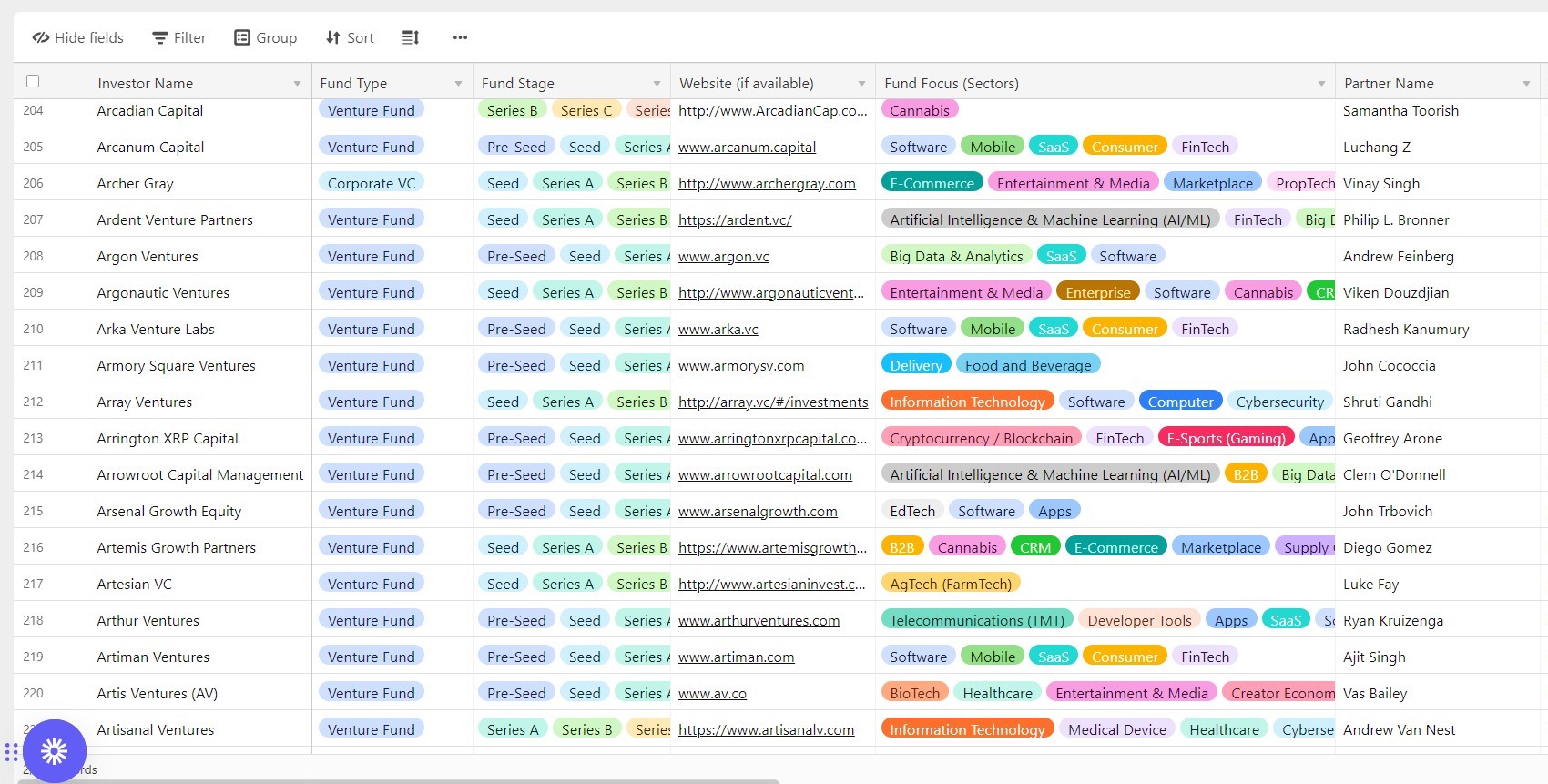
This structure makes it easier to understand why an investor belongs on your list and what you need to do next.
Avoid prioritizing investors based only on brand recognition. A smaller fund with a relevant investment thesis may be a better prospect than a well-known firm that does not invest at your stage.
5. Prioritize Investors by Fit
Not every researched investor deserves equal attention. Evaluate potential investors using five practical criteria:
- Sector fit: Does the investor understand your industry?
- Stage fit: Does the investor consider companies at your current stage?
- Geographic fit: Does the investor operate in your target market?
- Investment size: Is your funding requirement compatible with the investor's published preferences?
- Relevant activity: Has the investor demonstrated interest in similar companies?
You can use these criteria to create high-, medium-, and lower-priority groups. This is a research-based prioritization method, not a prediction that an investor will participate in your round.
6. Prepare for Investor Outreach
Before contacting an investor, prepare a concise explanation of your company. Your outreach should communicate what you do, the problem you solve, your evidence of traction, your fundraising target, and why you believe the investor is relevant.
Personalize each message using a genuine connection to the investor's thesis or portfolio. Where possible, explore appropriate warm introductions through founders, advisors, or professional contacts.
Track each interaction in your investor pipeline, including contact date, response, follow-up date, and next action. Respect investor preferences and applicable outreach and privacy requirements.
7. Make Investor Research Part of Your Fundraising Process
Investor research is not simply about collecting names and email addresses. It is about developing a clear understanding of who might be a suitable funding partner and why.
A structured research process helps founders spend less time reviewing unsuitable prospects and more time preparing thoughtful, relevant conversations.
At LeadX Ventures, we help startup founders research relevant angel investors and VC firms, evaluate investment fit, and build curated investor databases tailored to their fundraising goals.
Ready to build your investor pipeline?
Explore LeadX Ventures to learn how targeted investor research can support your fundraising preparation.
Book Consultation